
Your skin builds collagen itself
Radiofrequency energy heats the dermis to 52–55 °C—at that temperature collagen fibers contract and fibroblasts begin building new ones
The skin tightens right away as collagen shrinks, and keeps gaining density for months while synthesis continues. The surface stays intact: the epidermis is heated to only 40–42 °C.
What to expect
The doctor selects the technique, the cartridge and the depth for each specific area—settings for the skin around the eyes and for the body differ several times over
Two ways of delivering energy
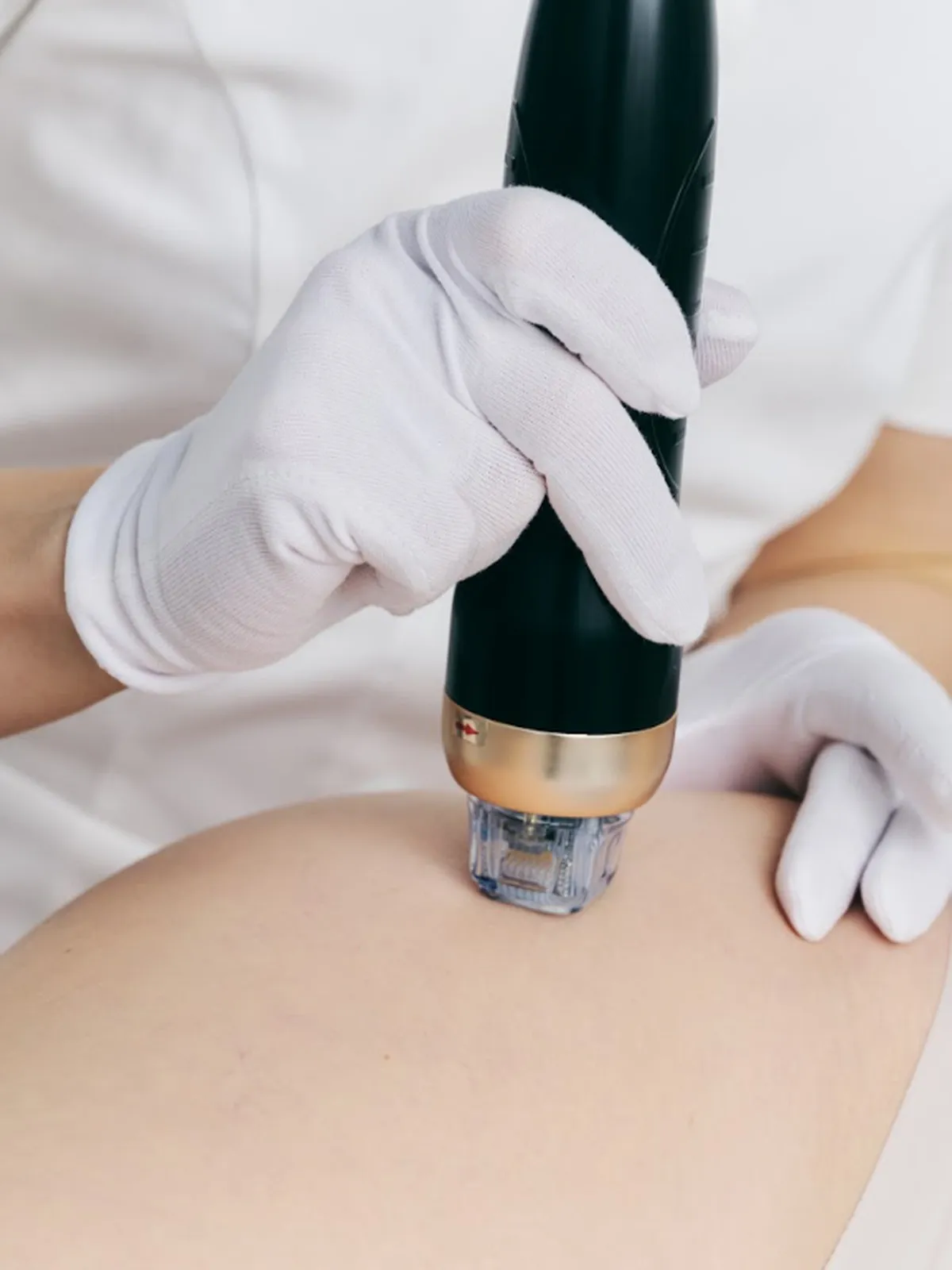
Microneedling RF—energy travels down the needles straight into the dermis, from 0.4 to 4 mm deep:
for scars, post-acne and pronounced wrinkles. Non-invasive fractional RF—surface heating, no punctures and no downtime
A cartridge for each area
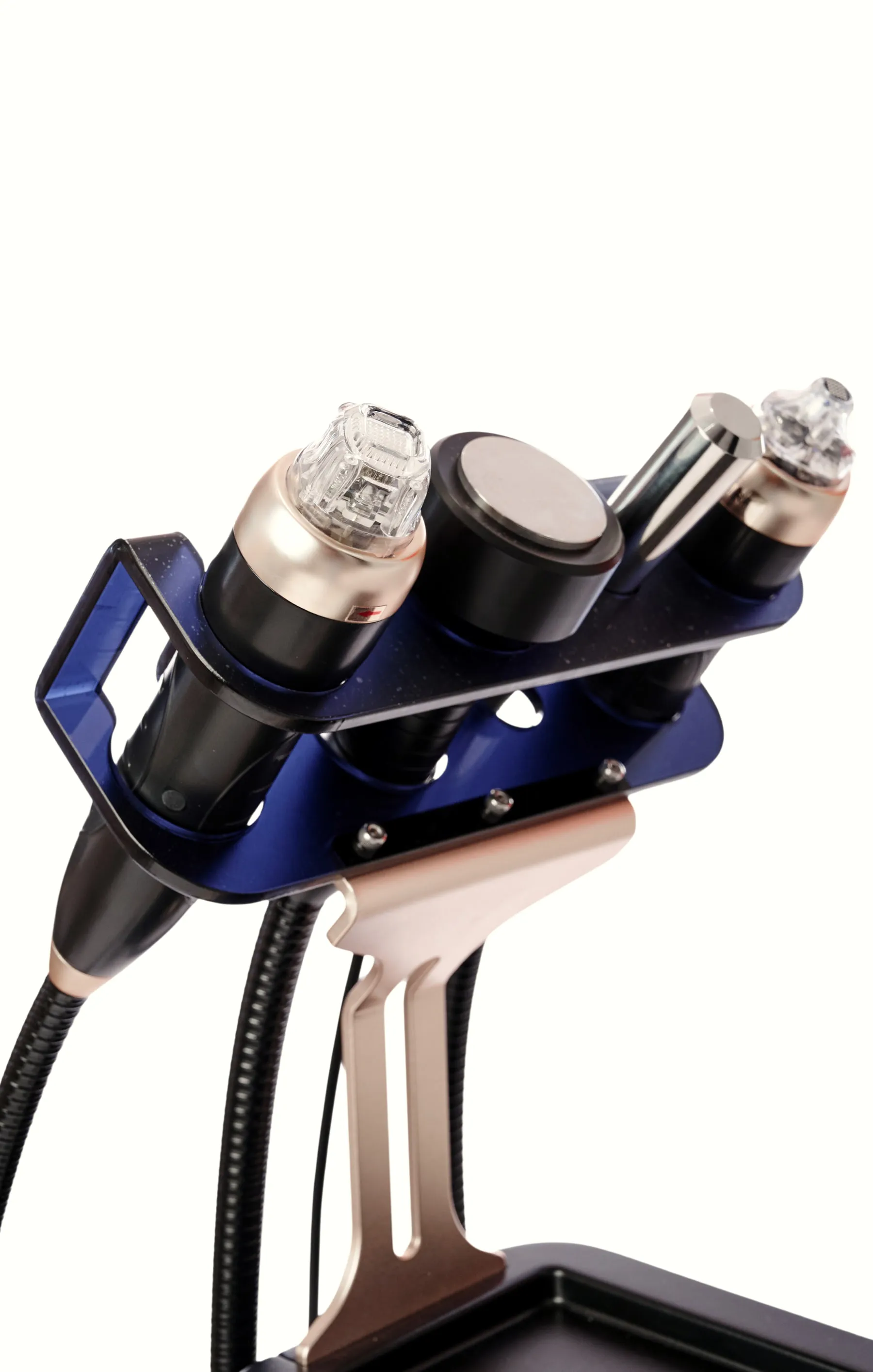
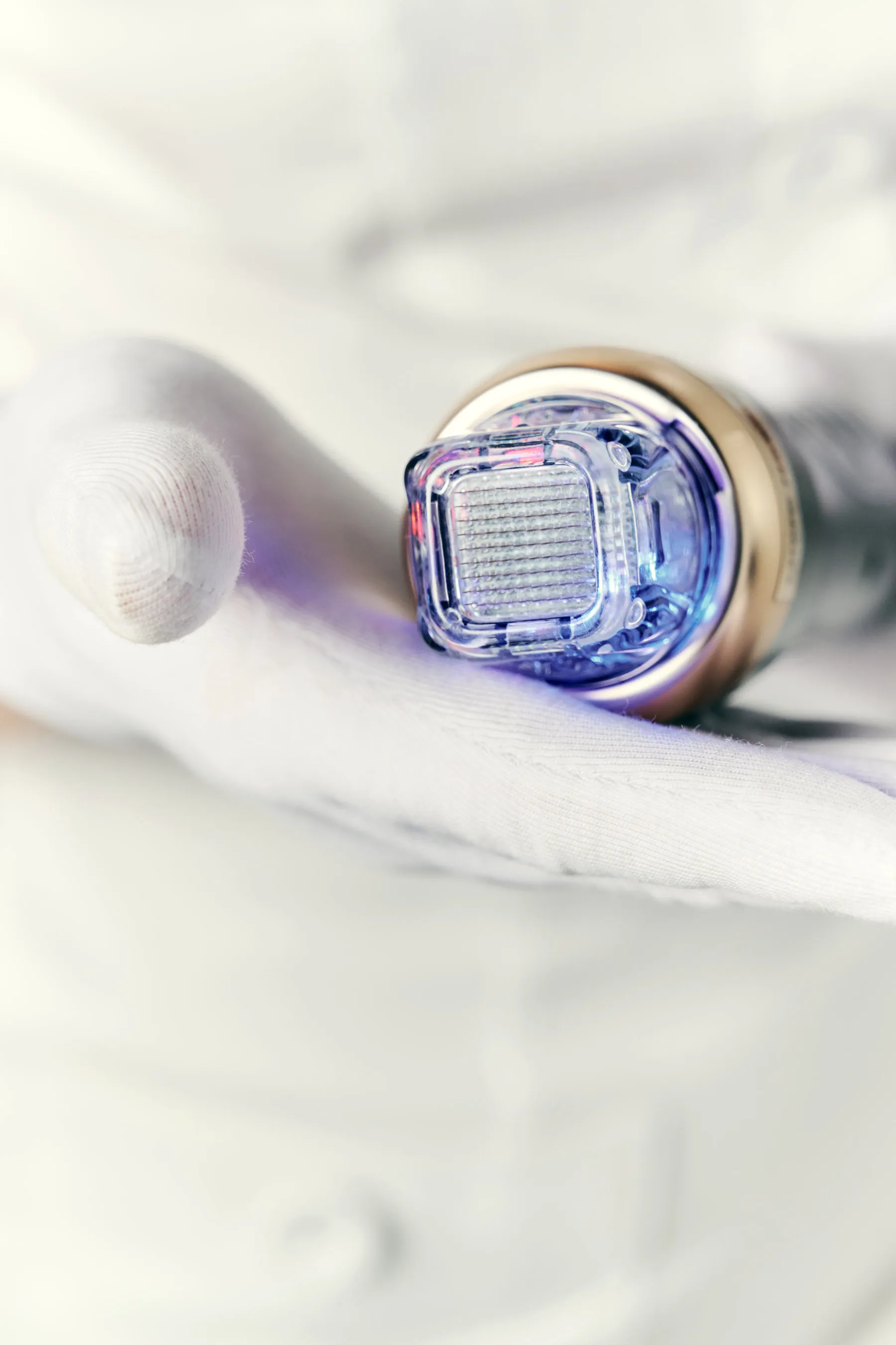
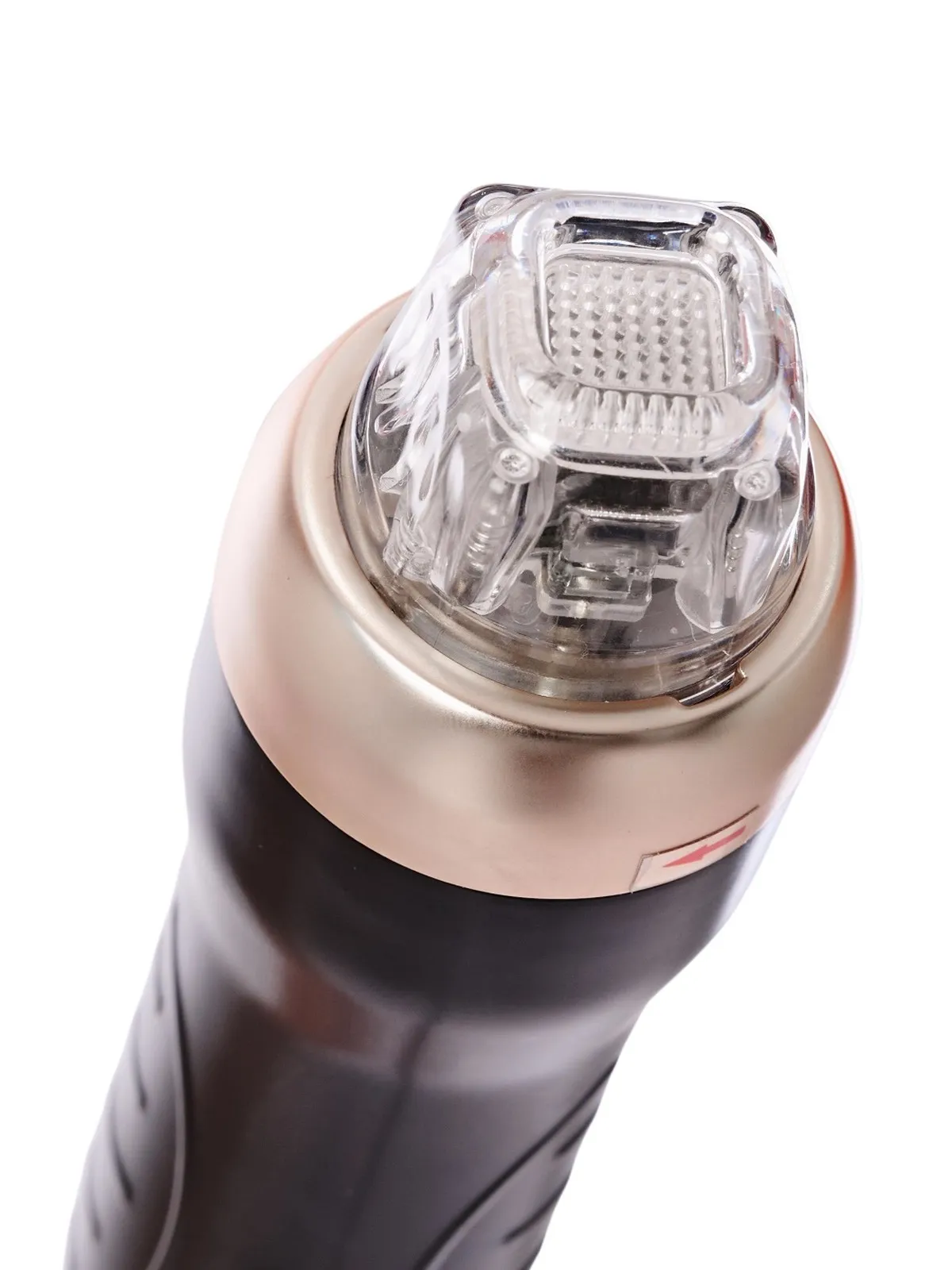
Cartridges with 18, 25, 49 and 81 needles:
18 for the periorbital area and the sides of the nose, 25 for the face, 49 and 81 for face and body. Needles are 200 µm, insulated and non-insulated—this decides whether the full needle heats up or only its tip
Parameters under control
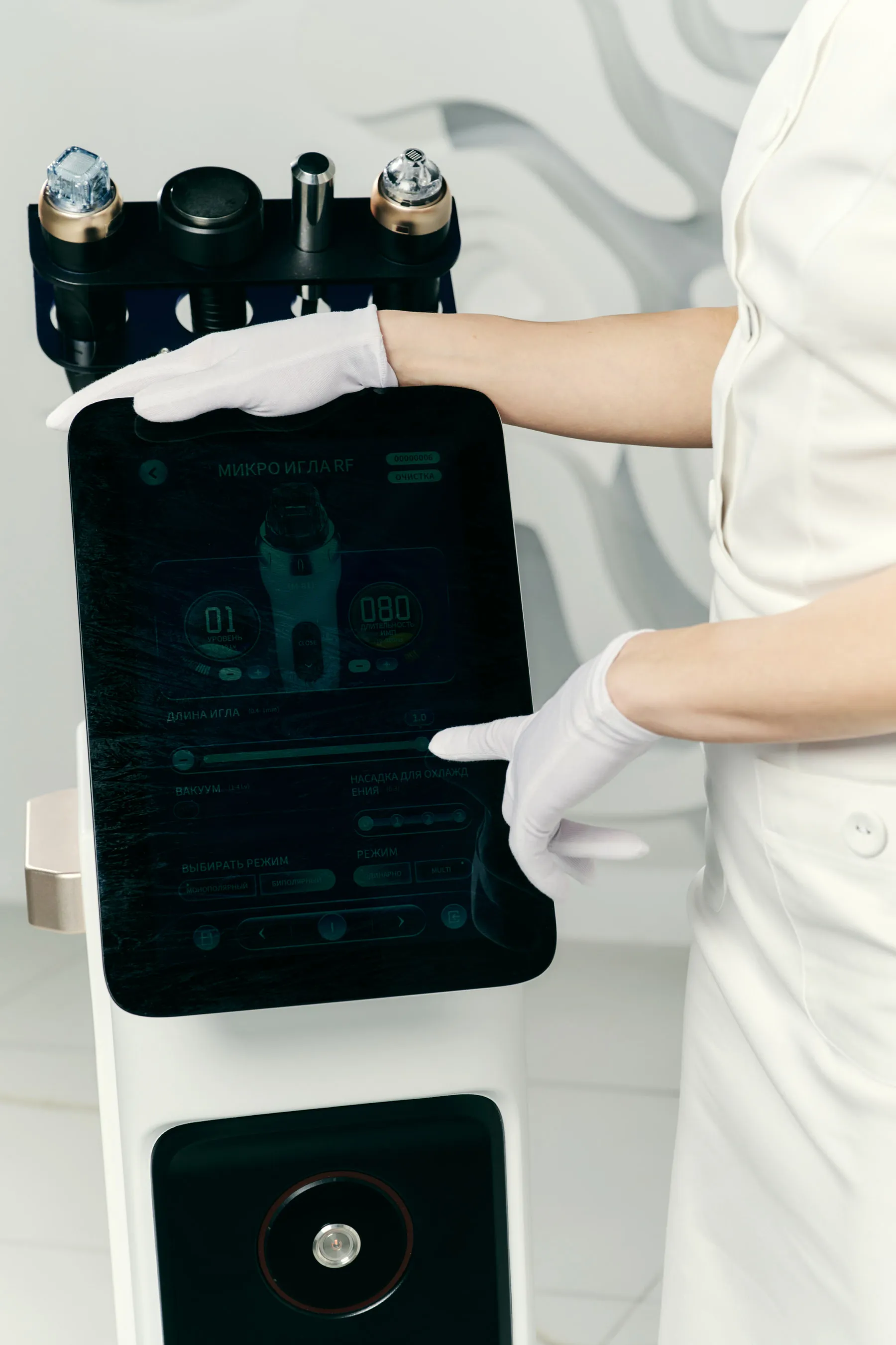
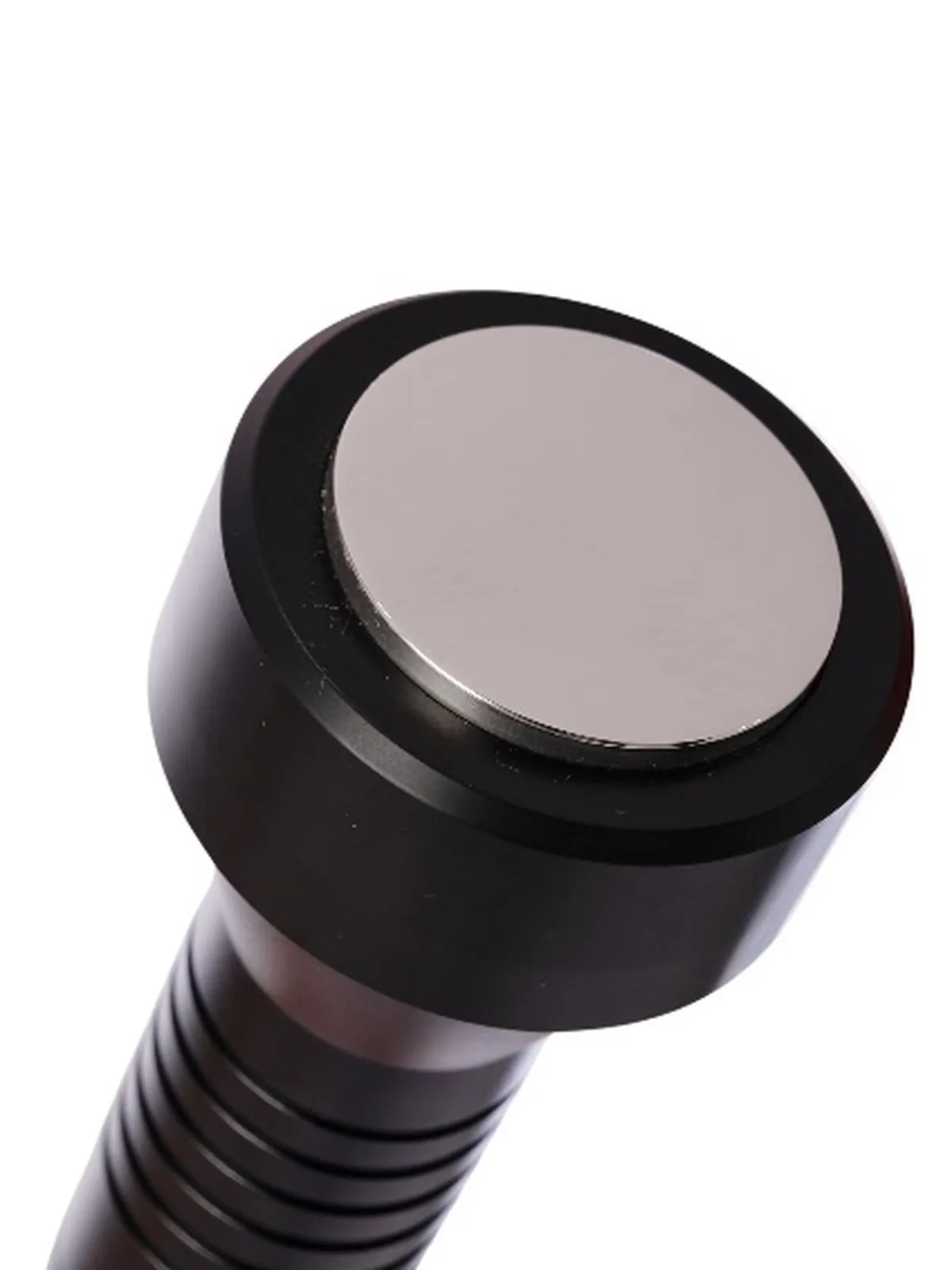
50 W of power, monopolar and bipolar modes, work with and without vacuum, a separate CryoCool cooling handpiece
The doctor runs the session by the protocol for that area, not by one generic setting
The result
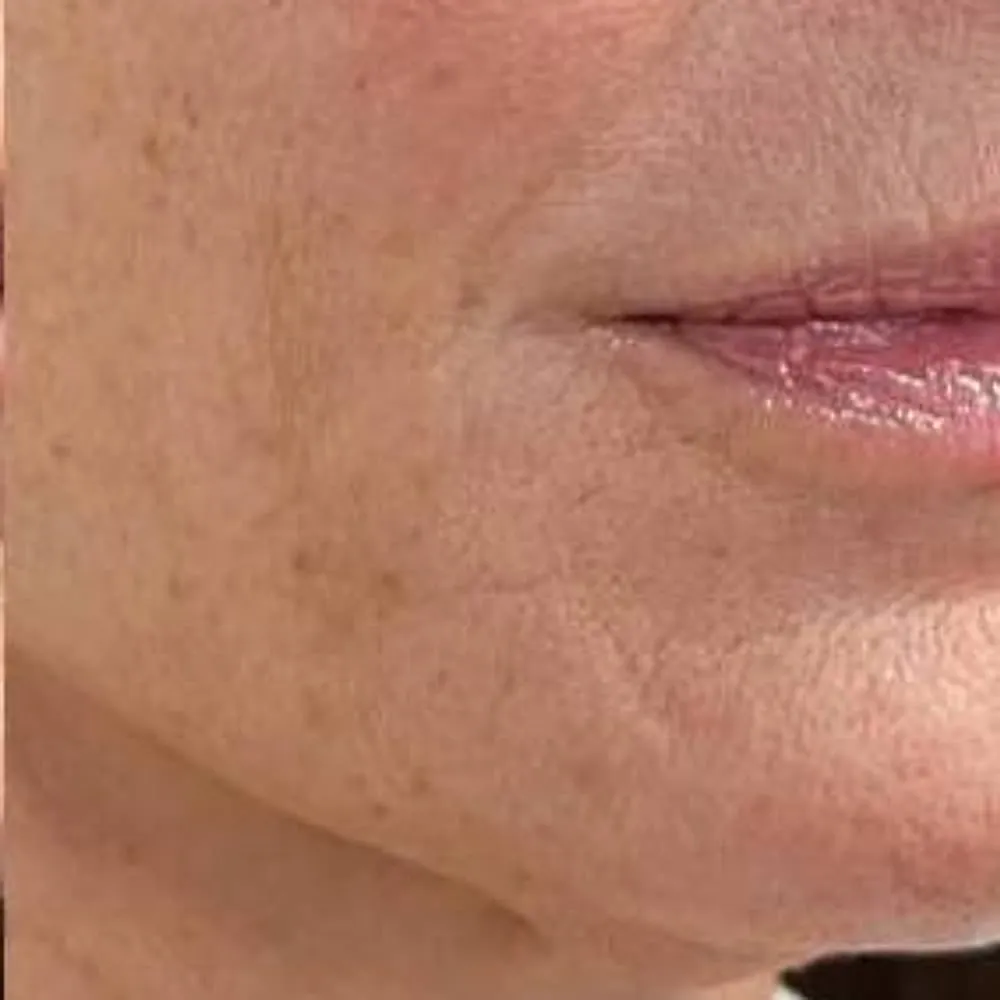
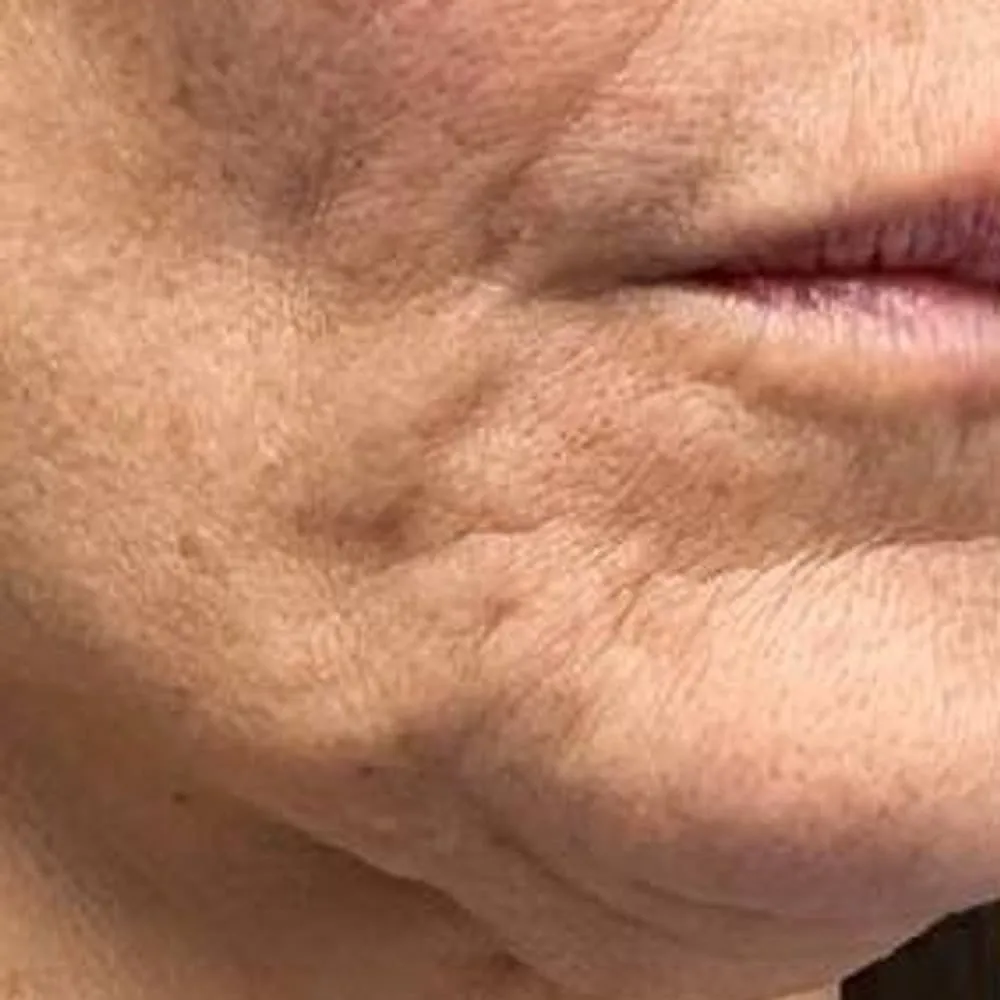
Tightening is visible after the first session; the full effect builds over several months as collagen is produced
Which technique your skin needs becomes clear at the examination
Depth set to the millimeter
RF energy is not scattered across the surface—it is delivered to a set depth, from 0.4 to 4 mm. The doctor chooses the cartridge, the depth, the intensity and the pulse type for each specific area: the skin around the eyes and the body call for fundamentally different settings. Radiofrequency has one more advantage—it is equally safe on any phototype, unlike light-based methods, for which darker skin is a contraindication.
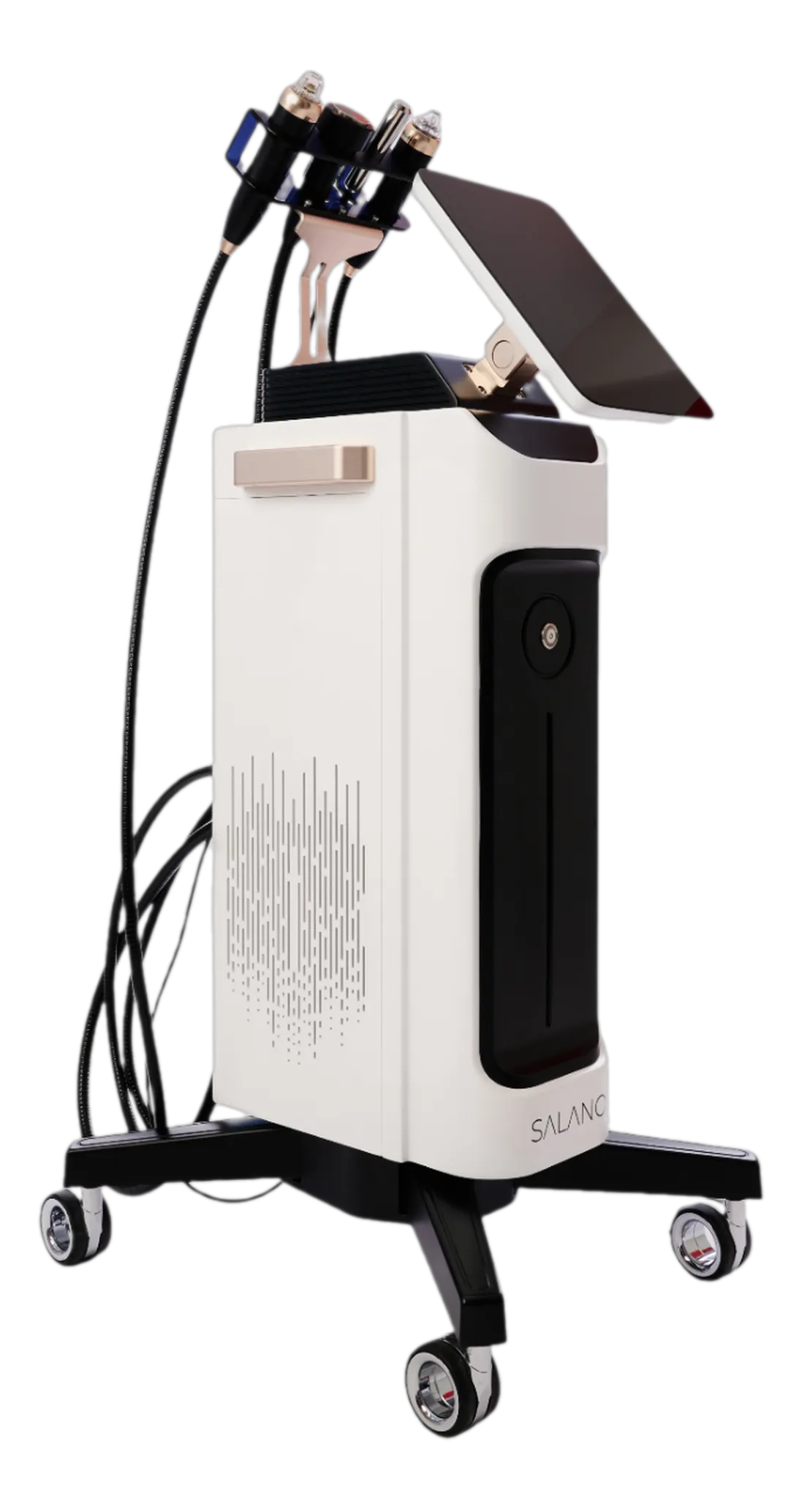
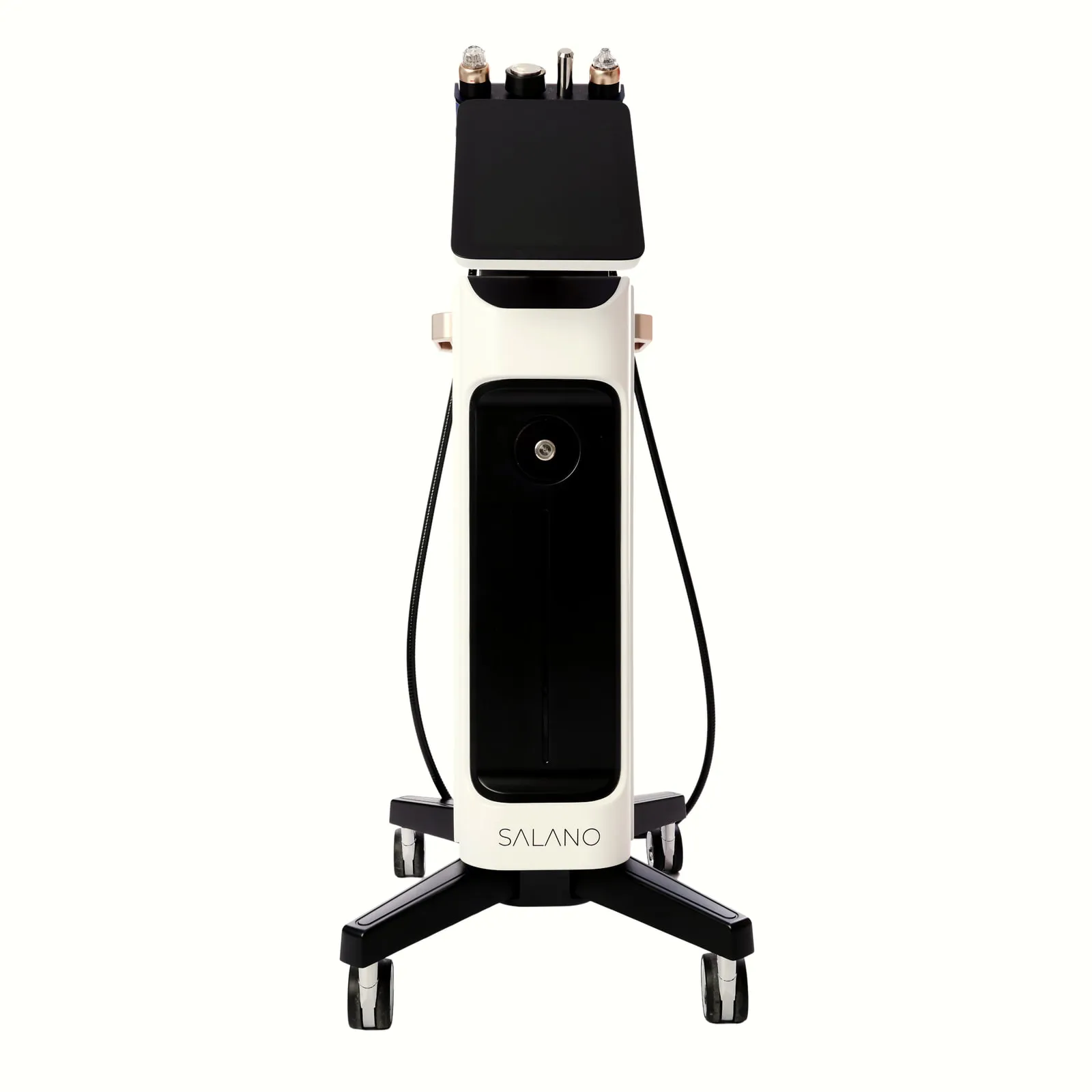
SALANO Optimus
A platform for microneedling and non-invasive fractional RF. Settings are chosen separately for every area—from the skin around the eyes to the body
Indications
For those who want pronounced lifting without surgery and accept a short recovery in exchange for a lasting result. One more advantage: RF works on any phototype, including darker skin.
Sound familiar? Let’s talk it through in person
Your doctor will examine your skin, tell you honestly whether this method is right for you, and put together a plan. A consultation commits you to nothing
9 protocols on this device
from the chin and neck to the full face, the body and the scalp. Three questions and we’ll name your protocol, price included
Before and after
The essentials, answered
Does it hurt?
It depends on the technique. Non-invasive fractional RF is painless and needs no anesthetic. Before a microneedling session we apply a topical anesthetic, and afterwards the area is cooled with the CryoCool handpiece. The doctor works to a sensation of warmth, never burning.
How many sessions do I need?
The non-invasive course is 6–10 sessions every 7–10 days, then maintenance once a month and a repeat course in 6–12 months. Microneedling is done 1–3 times with at least a month between sessions. The session itself takes 20–40 minutes.
What happens to the skin afterwards?
After the non-invasive technique—almost nothing, you can go back to your day. After microneedling there may be redness and swelling for 3–5 hours, erythema for 1–2 days, sometimes small crusts that come off within 3–7 days. This is an expected reaction, not a complication.
What should I avoid afterwards?
For two days—no steam room, sauna, tanning bed or intense exercise. For 24 hours—no makeup. For three days—no acids or scrubs. For two weeks—sunscreen every day. Following these rules directly affects your result.
Is it suitable for darker skin?
Yes. The safety and effectiveness of RF do not depend on skin color—that is its advantage over light-based methods, for which darker skin is a contraindication.
Who should not have it?
Cancer, including a history of skin cancer; a pacemaker; epilepsy; pregnancy and breastfeeding; infectious disease; a tendency to keloid scarring; inflammatory skin conditions; decompensated chronic illness. The doctor checks the full list at the consultation—if a contraindication is there, we will decline.
Didn’t find your question? Ask our doctors—we answer before you book, with no obligation
Precision matters more than power
High precision with minimal trauma: the doctor sets the depth, the intensity and the pulse type for each area separately
The rejuvenation process continues for several months after the session.
All equipment registered with Roszdravnadzor, the Russian health regulator
Meet the doctors who treat you→Performed by RE/FACE doctors · meet the team →